
When my khala called me last Ramzan crying because her 8171 SMS showed ‘ineligible’ even though she’s a widow raising three kids, I spent two full days sorting it out for her digging through BISP 8171 portal updates, visiting the Tehsil office, and re-verifying her NSER data.
That experience pulled me deep into the whole bisp program world, and since then I’ve helped more than forty families in my neighborhood check their 8171 Ehsaas Program status, fix NSER survey issues, and collect their payments. This guide is everything I learned the hard way no copy-paste government jargon, just what actually works in 2026.
Whether you’re checking eligibility for the first time, waiting on a stuck payment, or trying to figure out the latest bisp 8171 portal updates, I’ll walk you through it the way I’d explain it to my own family.
What is 8171 Ehsaas Program? (Quick Overview)
The 8171 Ehsaas program is Pakistan’s largest social safety net, run by the Government of Pakistan through BISP (Benazir Income Support Programme). The number “8171” is the official SMS shortcode you message your CNIC to it, and within minutes you get a reply telling you whether your household qualifies for financial assistance.
Originally launched in 2019 under Dr. Sania Nishtar’s leadership, this bisp program was built on top of the older BISP framework (which started in 2008). Today the two names are used almost interchangeably when people say “bisp 8171” or “8171 bisp,” they usually mean the same quarterly cash assistance that keeps roughly nine million families afloat across the country.
The support isn’t one-size-fits-all either. A widow in Tharparkar, a flood-affected family in DG Khan, and a student in Multan might all be registered under the same 8171 umbrella but receive completely different types of help cash, rations, scholarships, or interest-free loans. I’ve personally seen payments ranging from Rs. 13,500 quarterly Kafalat amounts to the special Rs. 25,000 emergency grants.
How Does the 8171 Ehsaas Program Work?
Here’s what actually happens behind the scenes when you send your CNIC to 8171 based on the latest BISP 8171 portal updates, I learned this after hours of sitting at a BISP Tehsil Office last year.
Your CNIC gets pinged against three databases simultaneously: NADRA (to verify you’re a real citizen with a valid card), the NSER registry (to pull your household’s poverty score), and BISP’s payment system (to check if you’re an active beneficiary). The combined answer comes back to your phone in under a minute.
The NSER (National Socio-Economic Registry) is the backbone of the whole thing. It’s basically a giant database of Pakistani households, built through door-to-door surveys where teams ask about your income, assets, family size, housing condition, and livestock. From those answers, the system calculates your PMT (Proxy Means Test) score a number between 0 and 100 that roughly estimates how poor your household is. The lower your PMT score, the more likely you are to be eligible for the 8171 Ehsaas Program.
When my khala’s case failed, it turned out her NSER data was eight years old and still listed her late husband as the household head. One dynamic survey update later and she was back in the system. This is why I always tell people: the Ehsaas scheme isn’t just about sending an SMS it’s about making sure your household record is current.
8171 Ehsaas Program Eligibility Criteria (2026 Updated)
Eligibility rules have tightened a bit for 2026, and I’ve seen plenty of people confused about them. Let me break it down clearly.
Who is Eligible?
You’re likely eligible for the bisp program if:
- Your household’s PMT score falls below the official poverty cutoff (currently 32 for most categories)
- You have a valid, unexpired CNIC from NADRA
- Your monthly household income is under Rs. 50,000
- You’re a widow, orphan, person with disability, or from a female-headed family (these are priority categories as per the latest BISP 8171 portal updates)
- You don’t own more than a modest amount of land or livestock
- You haven’t traveled abroad recently on your own passport
- You’re not a government employee or pensioner
Priority in 2026 under the 8171 Ehsaas Program is clearly going to widows, transgender persons, disabled individuals, flood-affected families in Sindh and Balochistan, and households with elderly dependents.
Who is Not Eligible?
You won’t qualify if:
- Any family member is a government employee (federal or provincial)
- You or your spouse receive a government pension
- You own a car registered in your name (motorbikes are fine)
- You have an active passport with international travel history
- Your household earns above the income threshold
- You already receive assistance from another major welfare program
- Your CNIC is expired or blocked by NADRA
A small but important thing: the system checks the whole family, not just the applicant. I’ve seen cases where a sister-in-law living in the same house had a government job, and that disqualified the entire household until they separated their records.
PMT Score & Poverty Assessment Explained
The PMT score confuses almost everyone. Think of it as your household’s “poverty grade.” Surveyors ask about things you own refrigerator, motorcycle, AC, washing machine, number of rooms, type of roof and plug those answers into a formula.
- PMT 0-16: Extremely poor, highest priority
- PMT 17-32: Poor, eligible for standard Kafalat
- PMT 33-50: Vulnerable but usually not eligible
- PMT 51+: Not eligible
If your score is just above the cutoff, don’t give up. Request a dynamic survey update families’ situations change (someone dies, a breadwinner loses a job, a flood destroys assets), and BISP does update scores accordingly.
Required Documents for Ehsaas Program Registration
Before you step out of your house for registration, grab these. I can’t tell you how many times I’ve seen people get turned away at the Tehsil Office for missing one paper.
- Original CNIC (issued by NADRA, unexpired) photocopies won’t do for biometric verification
- B-Form of every child under 18 in the household
- Registered mobile number in your own name (SIMs registered on someone else’s CNIC cause major problems when checking 8171 Ehsaas Program status)
- Family details names, CNICs, and relationships of everyone living under your roof
- Proof of address if available (utility bill or rent agreement)
- Death certificate if you’re applying as a widow
- Disability certificate from a government hospital if applying under the disability category
One more thing I learned the hard way: if your CNIC address doesn’t match where you actually live, update it at NADRA first. According to recent BISP 8171 portal updates, BISP sends surveyors to your CNIC address, and if you’re not there, you’ll be marked ‘not found.
8171 Ehsaas Program CNIC Check (All Methods)
This is the most searched question and honestly the easiest part. Two ways work reliably in 2026.
Method 1: CNIC Check via SMS (8171)
This is what I recommend for anyone without internet access:
- Open the messaging app on any mobile phone
- Type your 13-digit CNIC number no dashes, no spaces (example: 3520212345678)
- Send it to 8171
- Wait for the reply SMS usually arrives within 2-5 minutes
The reply tells you one of three things about your BISP program status: you’re eligible and a payment is ready, you’re registered but no payment is due yet, or you’re not currently eligible. The message comes in Urdu or English depending on your phone’s settings.
The SMS costs standard messaging rates (around Rs. 2 on most networks), and there’s no limit on how many times you can check.
Method 2: CNIC Check via 8171 Web Portal
For anyone who prefers the internet:
- Open your browser and go to 8171.bisp.gov.pk (this is the only official portal I’ll warn you about fakes later)
- Enter your 13-digit CNIC number in the first field
- Type the captcha code shown in the image
- Click the “معلوم کریں” (Check) button
- Your 8171 eligibility status, PMT score, and any pending payment info will appear
The portal is mobile-friendly, works in both Urdu and English, and doesn’t require any login or account. If the site loads slowly which happens around payment release dates try again after a few hours. I’ve noticed traffic spikes every quarter when new disbursements are announced.
8171 Ehsaas Program Online Registration Process
Registration is a separate step from eligibility checking. Just because the SMS says “not registered” doesn’t mean you can’t apply it just means you haven’t been surveyed yet.
Step-by-Step Portal Registration
- Visit 8171.bisp.gov.pk
- Click on “8171 Registration” or “رجسٹریشن”
- Enter your CNIC, mobile number, and household details
- Upload any required documents (scanned CNIC, B-Forms)
- Submit the form and note down your tracking number
- Wait for an SMS notification about your survey appointment
The portal registration is more of an expression of interest the real registration happens when the NSER surveyor visits your home. So don’t expect a confirmation of benefits right after submitting the online form.
Registration via SMS (Offline Method)
For people with basic phones or no internet:
- Send your CNIC number to 8171 via SMS
- If the 8171 Ehsaas Program reply says you’re not registered, you’ll get instructions to visit your nearest BISP Tehsil Office.
- Save this SMS as proof you may need to show it at the office
Registration via BISP Tehsil Office
This is the most reliable route, and honestly the one I recommend for first-timers:
- Find your nearest BISP Tehsil Office every district has at least one, and there are over 600 nationwide
- Carry all original documents (CNIC, B-Forms, death certificate if applicable)
- Fill out the NSER dynamic survey form at the office
- Provide biometric fingerprints for verification
- Give household details income, assets, dependents
- Collect your tracking slip
Within 30-45 days, you’ll receive an SMS about your eligibility decision. If approved, your first payment usually arrives in the next disbursement cycle you can track this through the latest BISP 8171 portal updates.
How Does the Ehsaas Eligibility System Work?
The beauty of the modern 8171 system and this is something I really appreciate having dealt with the old manual version is that it’s now almost fully automated. Here’s the flow:
- NADRA verification confirms your identity in real time
- NSER database pulls your household’s latest PMT score
- Auto-comparison against the eligibility threshold happens instantly
- Cross-check against disqualifying factors (government employment, car ownership, travel records)
- Payment eligibility is calculated based on the current cycle’s budget
The entire process is digitized to reduce corruption. No officer sits somewhere deciding your fate it’s all algorithm-driven against the NADRA and NSER records. Transparency has improved massively since the Ehsaas program was restructured.
Quarterly audits by BISP and biometric verification at every payment point have further strengthened trust. In 2025, thousands of ghost beneficiaries were removed from the rolls after automated filtering caught mismatches, which frustrated some people but honestly made the system more fair for genuinely deserving families.
8171 Ehsaas Program Payment Details & Withdrawal Methods
Current payment amounts for 2026 are:
- Benazir Kafalat (regular): Rs. 13,500 – Rs. 14,500 per quarter
- Taleemi Wazaif (scholarships): Rs. 1,500 – Rs. 4,000 per child per quarter
- Emergency Cash / Special grants: Rs. 25,000 one-time (for flood-affected, disability cases)
- Nashonuma (maternal/child nutrition): Rs. 2,500 quarterly + food basket
Once you’re approved, here’s how to actually get the money in your hand.
Withdraw from HBL ATM
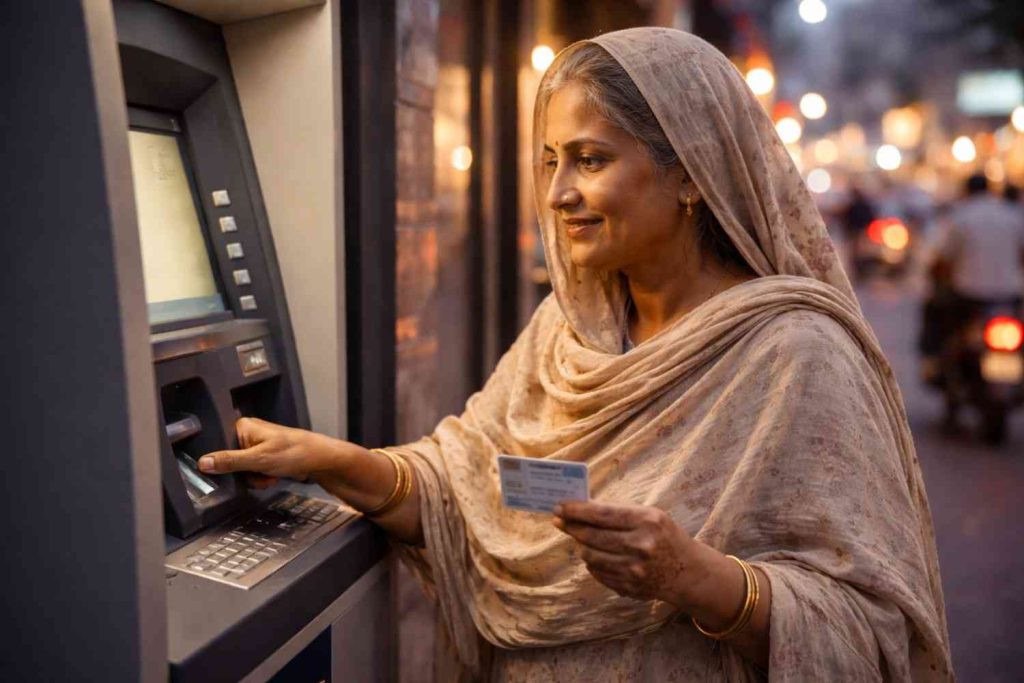
This is the fastest way if you live near a city:
- Go to any HBL ATM (Habib Bank Limited is BISP’s partner bank)
- Insert any card or press the “Ehsaas / BISP” option on the screen
- Enter your 13-digit CNIC
- Place your thumb on the biometric scanner
- Select withdraw cash
- Collect your money and receipt
Biometric verification matters the ATM won’t release cash without matching your fingerprint against NADRA records. As mentioned in recent BISP 8171 portal updates, if your fingerprint isn’t reading (this happens with elderly people or those who do manual labor), you’ll need to visit a retailer instead.
Collect from Retailer Shops
Authorized HBL Konnect retailer shops are spread across rural Pakistan where ATMs are scarce:
- Find a shop displaying the HBL Konnect or BISP logo
- Show your original CNIC
- The shopkeeper will verify you biometrically on their POS machine
- Collect your payment
Always count the cash before leaving, and don’t pay any ‘service fee’ collection under the BISP program is supposed to be free. If a retailer demands a cut (sadly common in some areas), report them to the BISP helpline.
Helpline Assistance
For any problem wrong payment amount, failed biometric, stuck transfer call 0800-26477 (toll-free). Staff speak Urdu, English, and most regional languages. I’ve personally called this helpline multiple times on behalf of families I’ve helped, and while wait times can be long, they do resolve issues.
Check NSER Survey Status for Ehsaas Program
Your NSER survey status determines whether you can even access Ehsaas benefits. Checking it is simple.
Send your CNIC to 8171 the reply tells you whether you’ve been surveyed, when the last survey happened, and what your current PMT score is. If your data is outdated (older than 4-5 years), request a fresh dynamic survey at your Tehsil Office.
Life situations change fast in Pakistan a breadwinner dies, crops fail, floods destroy homes. The dynamic survey lets BISP update your poverty status to reflect reality, and I’ve personally seen families move from “ineligible” to “eligible” within weeks after a proper survey update.
8171 Ehsaas Program Types & Schemes
The 8171 umbrella covers dozens of schemes. Here are the ones that matter most for 2026.
Ehsaas Kafalat Program
The flagship program. Quarterly cash stipend of Rs. 13,500 – Rs. 14,500 to eligible women from poor households. This is what most people mean when they talk about “BISP money.” Payments are disbursed in March, June, September, and December roughly.
Ehsaas Emergency Cash Program
Originally launched during COVID-19 with Rs. 12,000 payments, now used for disaster relief especially for the 2022-2024 flood-affected families in Sindh and Balochistan. Current payouts go up to Rs. 25,000.
Ehsaas Rashan Program
Subsidized groceries (flour, rice, pulses, ghee) for poor families. You get a discount of around 40% through registered utility stores. Registration happens through the same 8171 CNIC check system.
Ehsaas Nashonuma Program
Focused on maternal and child nutrition under the 8171 Ehsaas Program. Pregnant women and mothers of children under two get quarterly cash (Rs. 2,500 for boys, Rs. 2,000 for girls — yes, the difference is intentional to encourage girl-child registration) plus a monthly food basket with specialized nutrition supplements.
Ehsaas Amdan Program
Provides productive assets livestock (goats, cows, poultry), small business kits, agricultural inputs to help families earn sustainably. Nearly 200,000 families have received support through Amdan so far.
Ehsaas Loan Program
Interest-free loans up to Rs. 75,000 through the Akhuwat Foundation. Designed for small business owners who need working capital. Repayment is in easy installments without any riba.
Ehsaas Scholarship / Taleemi Wazaif
Education stipends for children of Kafalat Program beneficiaries. Primary school kids get Rs. 1,500, middle schoolers Rs. 2,500, and high schoolers Rs. 4,000 per quarter. Attendance requirement is 70%, which the school verifies.
Ehsaas Panahgah & Langar Program
Panahgahs are shelter homes in major cities where homeless people and daily wage workers get free lodging and meals. According to recent BISP 8171 portal updates, the Langar program, run with Saylani Welfare Trust, provides free meals at over 112 locations nationwide.
Ehsaas Koi Bhooka Na Soye
“No one should sleep hungry” a mobile food truck initiative that delivers free meals in urban slums and to daily wage workers at night. I’ve seen these trucks in Islamabad, Lahore, and Peshawar.
Programs for Disabled Persons
Dedicated financial assistance for persons with disabilities, including Ehsaas Digital Hubs (skill training centers), assistive device provision, and priority Kafalat enrollment.
8171 Ramzan Package Check (Latest Update)
The 8171 Ramzan package check is one of the most-searched queries every year, and 2026 will be no different. Here’s what I know from last year’s rollout.
Who’s eligible: All existing BISP 8171 beneficiaries automatically qualify, plus some additional low-income families enrolled specifically for Ramzan relief.
How to check: Send your CNIC to 8171 during Ramzan, and if the package is live, you’ll get a specific Ramzan package reply showing the amount and collection method. Alternatively, check 8171.bisp.gov.pk for the Ramzan-specific banner during the holy month.
Payment details: Last year’s Ramzan package gave Rs. 10,000 per family as a one-time grant, separate from regular Kafalat. Collection was through HBL ATMs and Konnect retailers just like normal payments.
Keep your mobile handy in the last week of Shaban that’s when 8171 Ehsaas Program SMS notifications usually start going out. If you don’t receive one by the second week of Ramzan, check the portal manually. I had to do this last year for three families in my area and two of them were eligible even though they missed the initial SMS.
Latest 8171 BISP Portal Updates (2026)
The 8171 new update situation changes almost monthly, so here’s what’s current as of 2026.
Upgraded portal interface: The 8171.bisp.gov.pk portal got a major redesign in late 2025 faster load times, mobile-optimized, and Urdu-English toggle. If you haven’t used it in a year, you’ll notice a big difference.
New eligibility filters: Automated filters now screen out applicants with expired CNICs, biometric mismatches, or unpaid micro-loans from Akhuwat. This caused payment delays in mid-2025 for some families but has tightened the system.
Expanded beneficiary list: BISP announced in February 2026 that it’s adding around 600,000 new families to the Kafalat rolls, particularly from flood-affected districts and newly surveyed households.
Payment increase: Quarterly Kafalat amount went up from Rs. 13,500 to Rs. 14,500 for some high-priority categories starting April 2026.
Mobile wallet integration: JazzCash and Easypaisa integration is being piloted in select districts so beneficiaries can receive payments directly on their mobile wallets without visiting ATMs.
WhatsApp verification pilot: BISP officials have clarified that there’s no official WhatsApp registration service any such offers are scams. Stick to the 8171 SMS and the official portal only.
For the freshest bisp 8171 portal updates, I recommend bookmarking the official portal and following BISP’s verified social media accounts rather than random websites.
Benefits of 8171 Ehsaas Program
Having helped dozens of families through this program, here’s what I’ve seen firsthand.
Direct financial relief: Rs. 54,000+ per year in Kafalat alone is genuinely life-changing for families earning less than that in a month. My own neighbor’s widow grandmother uses her quarterly payment to cover her grandson’s school fees.
Transparency through technology: No more waiting in endless queues or paying bribes to get your BISP program application processed. The NADRA + biometric + NSER system removed most of the corruption that plagued older welfare schemes.
Nationwide reach: The scheme operates in all four provinces, AJK, Gilgit-Baltistan, and the newly merged districts of KP. Over 600 Tehsil Offices ensure even rural access.
Multiple support types: You’re not stuck with just cash there’s education support for kids, nutrition for babies, emergency relief for disasters, and business loans for entrepreneurs. One program, multiple doors.
Women’s economic empowerment: Over 90% of Kafalat recipients are women, and the money goes directly to them, not to male household heads. This small design choice has had enormous social impact.
Ease of access: A simple SMS to 8171 replaces hours of paperwork. Anyone with a basic mobile phone and that’s over 90% of Pakistani adults now can participate.
Tips to Avoid Scams & Get Payment Safely
This section is honestly the most important, because I’ve seen good families lose money to fraudsters claiming to be from BISP.
Only trust these official channels:
- The SMS shortcode 8171
- The portal 8171.bisp.gov.pk
- The helpline 0800-26477
- HBL ATMs and authorized Konnect retailers
- BISP Tehsil Offices listed on the official website
Red flags that mean it’s a scam:
- Anyone asking for your CNIC PIN or biometric password
- SMS from unknown numbers (not 8171) promising money
- Websites like “8171-bisp-check.com” or similar real portal is only 8171.bisp.gov.pk
- WhatsApp messages claiming to be from BISP (there’s no official WhatsApp)
- Anyone demanding a “processing fee” the entire program is free
- “Agents” offering to speed up your approval for money
- Links asking you to download an app from outside the official Play Store
If someone claims they can “guarantee” your approval for a fee, they’re lying. Eligibility is decided by the automated system, not by middlemen. I’ve personally warned families in my village who were about to pay Rs. 5,000 to a fake agent the money is always free.
Safe withdrawal habits:
- Always use HBL ATMs in well-lit public areas
- Count cash before leaving the ATM or shop
- Never share your OTP or biometric data with anyone
- Keep your CNIC in a safe place loss/theft needs an immediate NADRA report
Common Mistakes to Avoid During Registration
These are the pitfalls I’ve watched people fall into over and over again.
Incorrect CNIC entry: Entering your CNIC with dashes or spaces on the 8171 Ehsaas Program portal causes instant failures. Always type it as a plain 13-digit number.
Unverified SIM: If your SIM is registered on someone else’s CNIC, the biometric matching will fail. Get your SIM transferred to your own CNIC at any mobile franchise before registering.
Incomplete NSER survey: Skipping questions or giving inaccurate income information might seem smart but hurts you long-term it messes up your PMT score calculation.
Old NADRA records: Expired CNICs or unupdated family composition (missed adding new children, a deceased spouse still listed) cause eligibility rejections. Update NADRA first, then apply.
Applying through unofficial websites: Fake sites often charge a fee for “registration” that does nothing. Only use 8171.bisp.gov.pk.
Ignoring follow-up SMS: BISP sends survey appointment dates, payment release notifications, and eligibility updates via SMS from 8171. Missing these can delay your payment by months.
Not keeping tracking numbers: When you register at a Tehsil Office, you get a tracking slip. Photograph it. Save it. Without it, following up becomes difficult.
Mismatched addresses: Your CNIC address and actual residence must match for the NSER surveyor to find you. Update NADRA if you’ve moved.
FAQs
How to check Ehsaas Program eligibility using CNIC?
Send your 13-digit CNIC (no dashes) to 8171 via SMS, or visit 8171.bisp.gov.pk and enter your CNIC with the captcha code. Both methods show your eligibility and any pending payment within minutes.
Can I register online for 8171 Ehsaas Program?
Yes and no. You can submit your details online at 8171.bisp.gov.pk, but the real registration happens through an NSER surveyor visit or a trip to your local BISP Tehsil Office for biometric verification. Online submission is just the first step.
How long does approval take?
Typically 30-45 days from the date of your NSER survey to receiving an eligibility decision. First payments usually follow in the next quarterly disbursement cycle, so allow up to 90 days total from registration to money-in-hand.
What is NSER survey?
The National Socio-Economic Registry survey is a door-to-door household assessment where BISP teams collect information about your income, assets, family size, and living conditions. This data generates your PMT score, which determines eligibility for the bisp program and all related schemes.
How to receive Ehsaas payment?
Eligible beneficiaries collect payments through three main channels: HBL ATMs (insert any card, select Ehsaas/BISP, enter CNIC, biometric verification, withdraw cash), HBL Konnect retailer shops (show CNIC, biometric verification, collect cash), or BISP Tehsil Offices (for those with biometric issues). All collection is biometrically secured and completely free.
Conclusion
The 8171 Ehsaas Program isn’t perfect I won’t pretend otherwise. There are still delays, occasional system glitches, and confusion around eligibility. But when I look at my khala who now receives Rs. 14,500 every quarter, or the flood-affected family two streets down who rebuilt their home with Rs. 25,000 emergency cash, or the widowed mother whose son is in school only because of Taleemi Wazaif the program is changing real lives in real ways.
Your action step today is simple: pick up your phone, type your 13-digit CNIC, and send it to 8171. If you’re eligible, great follow up at your nearest BISP Tehsil Office. If you’re not, don’t lose hope. Request an NSER dynamic survey update, correct any NADRA issues, and try again. Circumstances change, and so does eligibility.
The money is yours if the government has recognized your need. Don’t let fake agents, wrong information, or paperwork hassles keep you from what’s already been set aside for families like yours. Check your CNIC today, keep an eye on BISP 8171 portal updates, and if you need help understanding the reply, come back and re-read this guide as many times as you need.


